Christmas Post: Introducing the history of Christmas stamps
We are now entering the most wonderful time of the year for many - Christmas. Postal history beautifully reflects the cultural differences of peoples in the western world. Below is a brief overview of the history of Christmas stamps in Europe, the United States and Canada.
United Kingdom: The United Kingdom, with its rich history and traditions, has long been a bastion of Christmas celebrations. Victorian-era customs such as carol singing and festive feasts have left an unmistakable imprint on British Christmas. While specific catalogue numbers for Christmas stamps can vary by year and design, it's worth noting that the rich tradition of Christmas stamps began in 1966 with the issue of the first Christmas stamp featuring a child's drawing. The stamp has the catalogue number sg.713, and also exists in a variant with a phosphor stripe, designated sg.713pa.
Germany: Germany, famous for its fabulous Christmas markets and the origins of the Christmas tree tradition, has a deeply rooted relationship with Christmas celebrations. German Christmas stamps often depict scenes from these markets, traditional decorations and the iconic puppet soldier. Germany (or West Berlin) issued its first Christmas stamp in 1969, Mi: 352.
France: In France, Christmas is a time of family gatherings and culinary delights, highlighted by the "Réveillon", a festive dinner on Christmas Eve. Nativity scenes, known as crèches, are an integral part of French Christmas traditions. France issued its first Christmas stamp in 1962.
Nordic countries: The Nordic countries contribute their own unique Christmas traditions, from the Swedish feast of St. Lucia to the Norwegian custom of hiding a broom. Christmas stamps from Scandinavia often depict winter landscapes, folkloric characters and the mesmerising beauty of the Northern Lights. Sweden and Denmark were among the first to issue so-called "Christmas seals", which could be translated as Christmas coupons, as early as 1904. The aim was to help raise funds for charity. For the first issue, the money raised was to help children with tuberculosis.
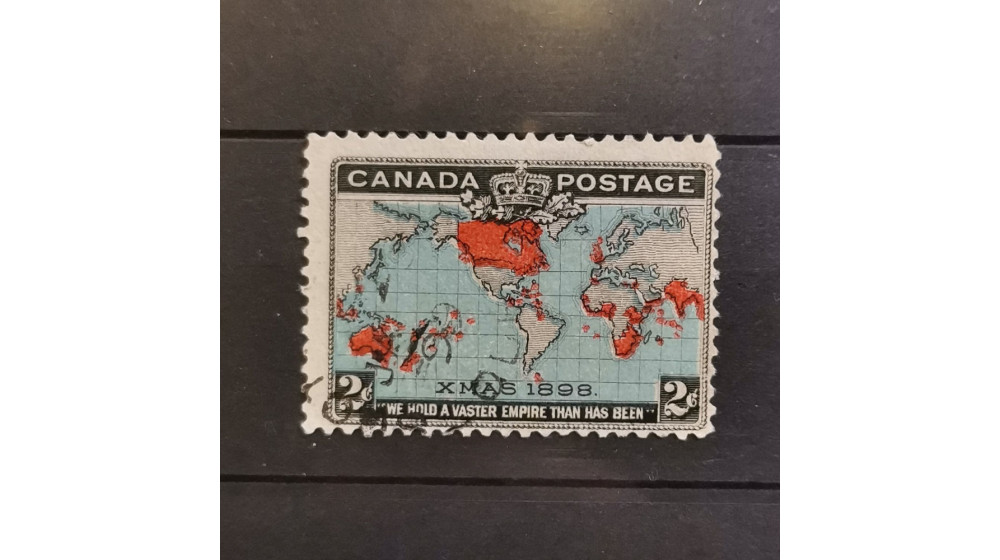
United States and Canada: In the United States, the tradition of Christmas stamps dates back to 1962, but earlier coupons similar to those of the Nordic countries were issued. In this regard, it is also important to mention Canada, which issued the world's first Christmas stamp in 1898. You can also find it in our eshop in the Stamps Canada section as sg167, containing the inscription XMAS 1898. The Stanley Gibbons catalogue distinguishes several variations, notably by the background colour (the colour of the oceans on the world map) blue-green 167a, 168 with a blue ocean and sg166 lavender. There are also variants without serrations and with plate defects (which are listed in the Scott catalogue).
Finally, let me remind you of the ongoing competition on our social media for a small collection of Christmas stamps (including the oldest one).
Wishing you a wonderful Christmas and all the best for the year ahead.
United Kingdom: The United Kingdom, with its rich history and traditions, has long been a bastion of Christmas celebrations. Victorian-era customs such as carol singing and festive feasts have left an unmistakable imprint on British Christmas. While specific catalogue numbers for Christmas stamps can vary by year and design, it's worth noting that the rich tradition of Christmas stamps began in 1966 with the issue of the first Christmas stamp featuring a child's drawing. The stamp has the catalogue number sg.713, and also exists in a variant with a phosphor stripe, designated sg.713pa.
Germany: Germany, famous for its fabulous Christmas markets and the origins of the Christmas tree tradition, has a deeply rooted relationship with Christmas celebrations. German Christmas stamps often depict scenes from these markets, traditional decorations and the iconic puppet soldier. Germany (or West Berlin) issued its first Christmas stamp in 1969, Mi: 352.
France: In France, Christmas is a time of family gatherings and culinary delights, highlighted by the "Réveillon", a festive dinner on Christmas Eve. Nativity scenes, known as crèches, are an integral part of French Christmas traditions. France issued its first Christmas stamp in 1962.
Nordic countries: The Nordic countries contribute their own unique Christmas traditions, from the Swedish feast of St. Lucia to the Norwegian custom of hiding a broom. Christmas stamps from Scandinavia often depict winter landscapes, folkloric characters and the mesmerising beauty of the Northern Lights. Sweden and Denmark were among the first to issue so-called "Christmas seals", which could be translated as Christmas coupons, as early as 1904. The aim was to help raise funds for charity. For the first issue, the money raised was to help children with tuberculosis.
United States and Canada: In the United States, the tradition of Christmas stamps dates back to 1962, but earlier coupons similar to those of the Nordic countries were issued. In this regard, it is also important to mention Canada, which issued the world's first Christmas stamp in 1898. You can also find it in our eshop in the Stamps Canada section as sg167, containing the inscription XMAS 1898. The Stanley Gibbons catalogue distinguishes several variations, notably by the background colour (the colour of the oceans on the world map) blue-green 167a, 168 with a blue ocean and sg166 lavender. There are also variants without serrations and with plate defects (which are listed in the Scott catalogue).
Finally, let me remind you of the ongoing competition on our social media for a small collection of Christmas stamps (including the oldest one).
Wishing you a wonderful Christmas and all the best for the year ahead.