Collecting Postal History Covers: A Collector's Guide
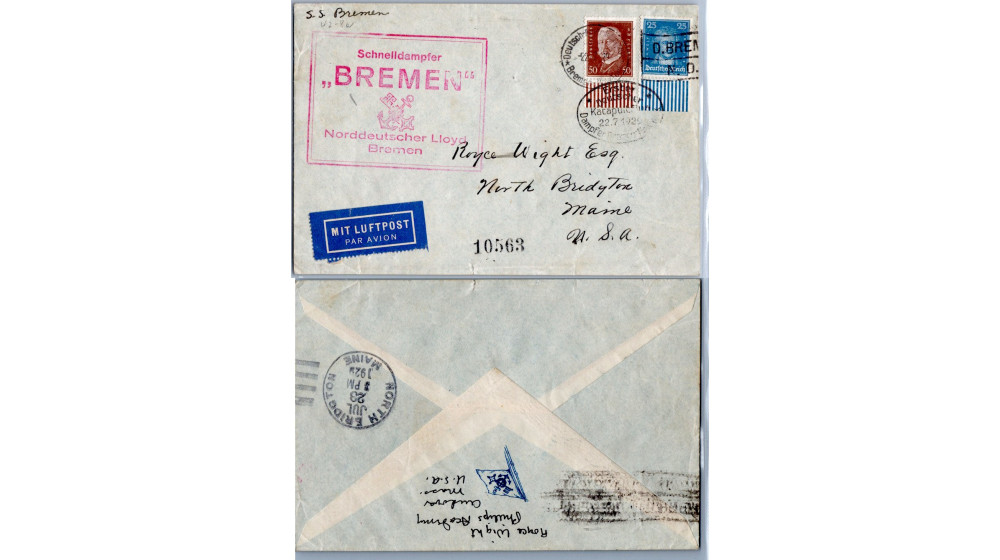
A postal history cover is more than a stamp – it is a postal document with a story. An envelope that actually travelled through the mail preserves everything a soaked-off stamp loses: the rate paid, the route, the postmarks, censor markings, and the names of sender and addressee. That is why collecting covers (postal history) is one of the most fascinating fields of philately. In this guide you will learn what covers are, which types exist and what determines their value – and we will show interesting pieces from our postal history offer.
Cover, postal stationery, or cut square?
A cover (entire) is a complete postal item exactly as it passed through the mail – an envelope, postcard or dispatch note franked with adhesive stamps or a meter imprint, with all postal markings intact. Postal stationery, by contrast, has the stamp printed directly on the item by the postal administration. A cut square is just a piece cut from a cover, keeping the stamp and cancellation – historically common practice, strongly discouraged today. A simple rule applies: the same cancellation is worth more on a complete cover than on a cut square. Which is why you should never soak stamps off old envelopes – it destroys their collector value for good.
The main types of postal history covers
- Pre-philatelic letters – folded letters from before adhesive stamps existed (in the Austrian lands before 1850), bearing only handstamps and manuscript rate markings.
- First day covers (FDC) – a stamp cancelled on its first day of validity; the earliest recorded examples date to May 1840 and the Penny Black.
- Postal stationery – cards and envelopes with an imprinted stamp; used examples with added adhesives sit on the border between stationery and covers.
- Field post / military mail – soldiers' correspondence with field post office cancellations, from the German Feldpost to the American APO/FPO system. The Czech classic is the field post of the Czechoslovak Legions (1918–1920).
- Maritime mail – mail posted on board ships, receiving the PAQUEBOT marking (a system standardised by the Universal Postal Union in 1891) or the German Seepost cancellations.
- Airmail and Zeppelin mail – first flights, catapult mail and letters carried by the Graf Zeppelin between 1928 and 1937.
- Censored mail – wartime letters opened by the censor, resealed with tape and struck with examiner marks.
- Polar mail – mail from polar stations and expeditions; Admiral Byrd's second Antarctic expedition alone had over 150,000 collector covers cancelled at the Little America post office in 1933–35.
- Commercial mail and registered letters – ordinary business correspondence is historically the most honest material; registered and express items carry richer frankings and labels.

What makes a cover valuable
Among dealers it is said that destination, rate and franking determine a cover's desirability 95 % of the time. Sought-after are unusual frankings (multiple, mixed, sole use of a high value), short-lived rates, exotic destinations and routes, scarce cancellations and censor marks – and of course condition, though for exceptional items rarity outweighs quality. How high can prices go? The Bordeaux cover bearing both 1847 Mauritius "Post Office" stamps sold for a record of roughly 4 million dollars in 1993, the Ball cover from the same issue reached about 8.1 million euros in 2021, and the American Alexandria "Blue Boy" sold for 1.18 million dollars in 2019.
Czechoslovak postal history
Czech and Slovak postal history offers superb collecting ground: Hradčany frankings (tariff period studies 1918–1920, multiple and mixed frankings), the Pošta Československá 1919 overprints on Austrian and Hungarian stamps – beware of forgeries and buy expensive pieces only verified – and the already mentioned Legion field post, whose first field post wagon left Chelyabinsk in September 1918. From our offer, see for example a cover with the express stamp Pof.S1 or a Protectorate cover with Pof.37 (4 K).
Interesting pieces in our offer
The Postal History Covers section is continuously restocked and organised into ten subcategories by country and mail type:
- Czechoslovakia – Hradčany, express and Protectorate covers; e.g. the express stamp cover Pof.S1.
- Europe – from British King George VI first day covers (1937–39) to a German Empire letter with Mi.19 from 1872.
- British Colonies – covers from Southern Rhodesia (SG41-48), Nigeria (SG66-67), Zanzibar, Tanganyika and Swaziland with Stanley Gibbons referenced frankings.
- Africa – Egypt, Sudan, Morocco, Belgian Congo and more.
- Asia – Asian destinations and frankings.
- North America – USA and Canada, being restocked continuously.
- Antarctica – over fifty covers from research stations; for example an American flight cover from McMurdo Station with the cachet of the US Navy squadron VXE-6 – a fine piece of military polar mail.
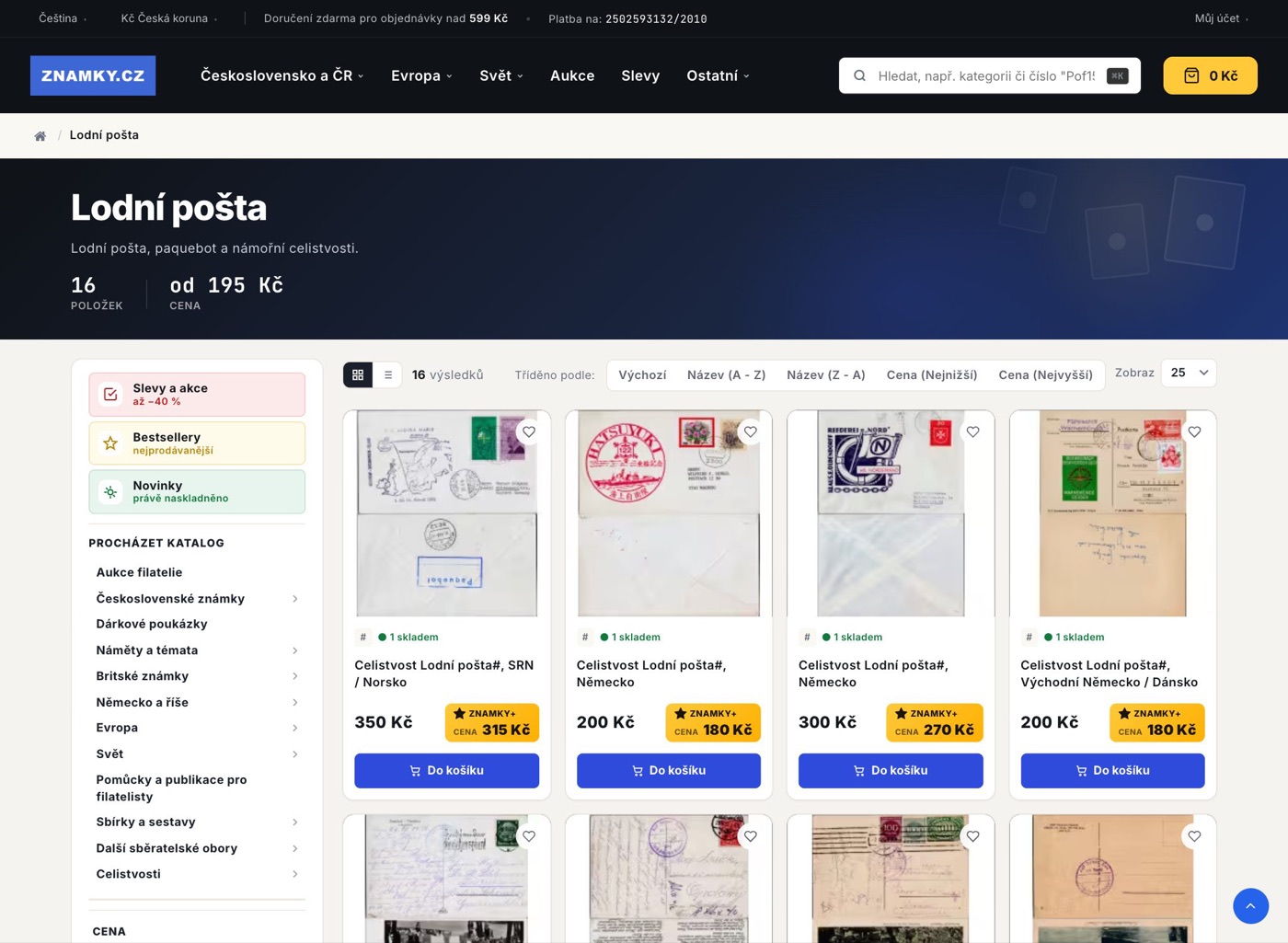
- Maritime Mail – paquebot and Seepost covers including German ship mail and an item from Heligoland.
- Airmail – first flights and airmail frankings, category being filled right now.
- Zeppelin Mail – airship-carried mail, category being filled right now.
If you collect the British colonies, read our detailed article on British Africa stamps and the Cape of Good Hope triangulars.
Tips for beginning collectors
- Pick a specialty early – a country and period, a mail type (field, maritime, airmail) or a type of marking. Postal history rewards depth over breadth.
- Store covers flat in archival, acid-free and PVC-free sleeves, away from light and humidity.
- Never "improve" a cover – do not remove stamps, trim edges or erase notes. Originality is the value.
- Beware of fakes – stamps added later, forged cancellations and repaired items; buy expensive pieces from dealers with an authenticity guarantee.
- Prefer genuinely used mail – mass-produced modern FDCs are cheap and plentiful; real commercial correspondence is scarcer and more desirable.
Frequently asked questions
What is the difference between a cover and postal stationery?
A cover is any complete item that passed through the mail franked with stamps or a meter. Postal stationery has the stamp printed directly on the item by the postal administration.
Should I soak a stamp off an old envelope?
No. A complete cover is almost always worth more than the stamp alone or a cut square – removing the stamp destroys the value irreversibly.
How should I start collecting covers?
Choose a narrow specialty, buy pieces with clear postmarks and a readable story, and store them flat in archival sleeves. Find inspiration in our postal history offer.